
A golfer can hear the same instruction ten different ways and still not know what changed in the body. "Load more." "Stay centered." "Sequence earlier." Those words can be accurate and still be hard to feel.
GOATY visual lessons solve that translation problem. The AI measures the swing, compares it to the GOAT model, and turns the finding into a card that shows the exact movement pattern, score, correction, and likely result.
Why Golfers Need a Visual Language
Golfers do not struggle because they lack tips. They struggle because the body is doing one thing while the mind thinks it is doing another. A traditional lesson often creates a language gap: the coach describes the movement, but the student cannot always see the mismatch clearly enough to own it.
GOATY closes that gap by turning motion into a simple visual grammar:
- Your current position, measured from the swing video.
- The model position, based on the GOAT movement pattern.
- The size of the gap, expressed as a percentage or score.
- The correction, stated as a movement target.
- The likely result, so the golfer knows why the correction matters.
What a GOATY Visual Lesson Card Shows
Each card is designed to answer the questions golfers naturally ask after an AI swing analysis: What did GOATY see? How far off was I? What should I change? Why does it matter?
The score panel gives the quick read. The video overlay shows the body measurement. The "GOATY Sees" column explains the pattern in plain language. The bottom panel ties the mechanic to the chain reaction that follows.
The key difference: this is not a decorative report. It is a coaching interface. The card is meant to help you understand the next rep, not admire the last one.
Three Examples From GOATY's New Visual Language
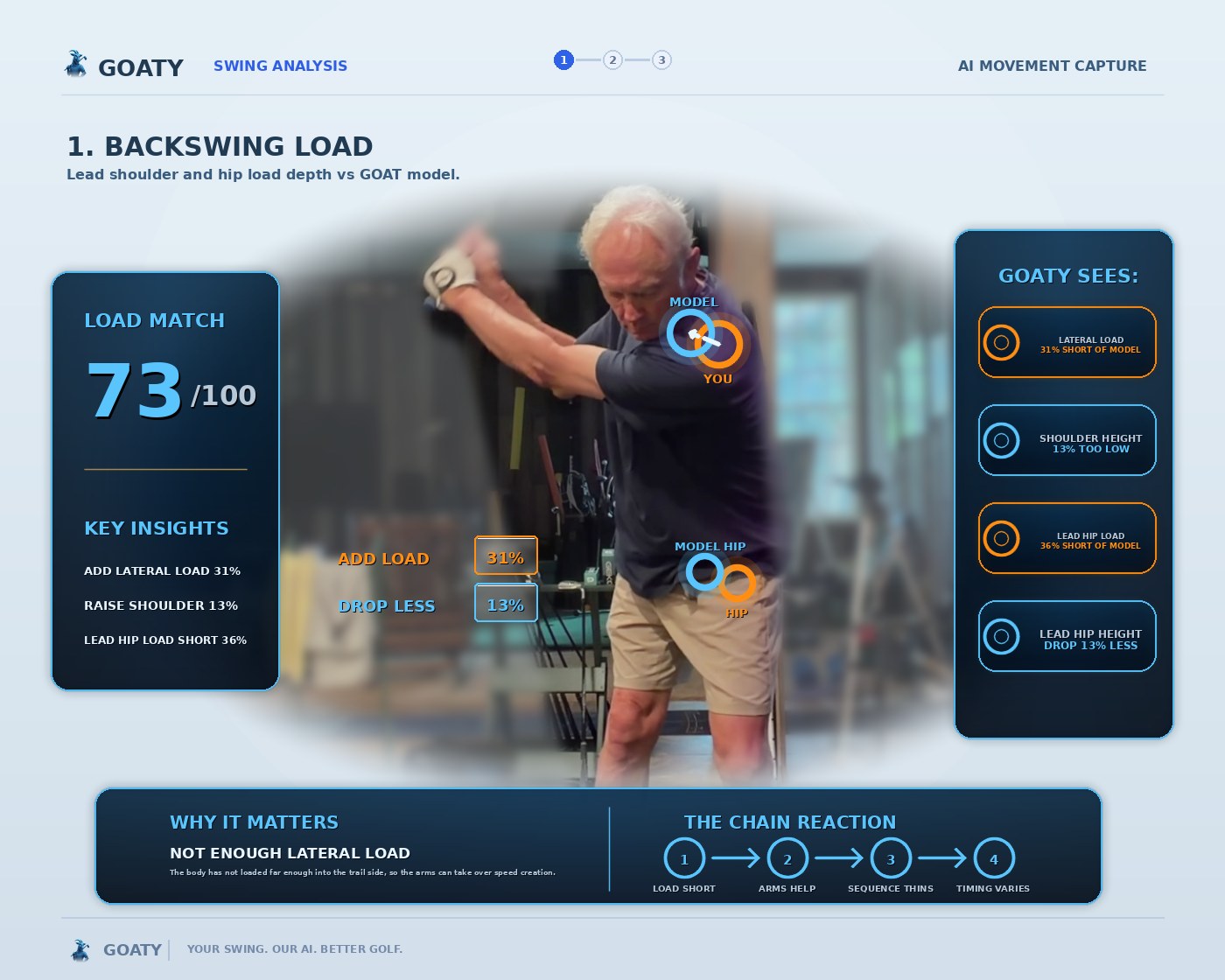
1. Backswing Load
The backswing load card shows whether the lead shoulder and lead hip loaded deeply enough compared with the model. If the body does not load, the arms tend to take over. The card turns that into a visible correction: add lateral load, raise the shoulder, or reduce lead hip drop.
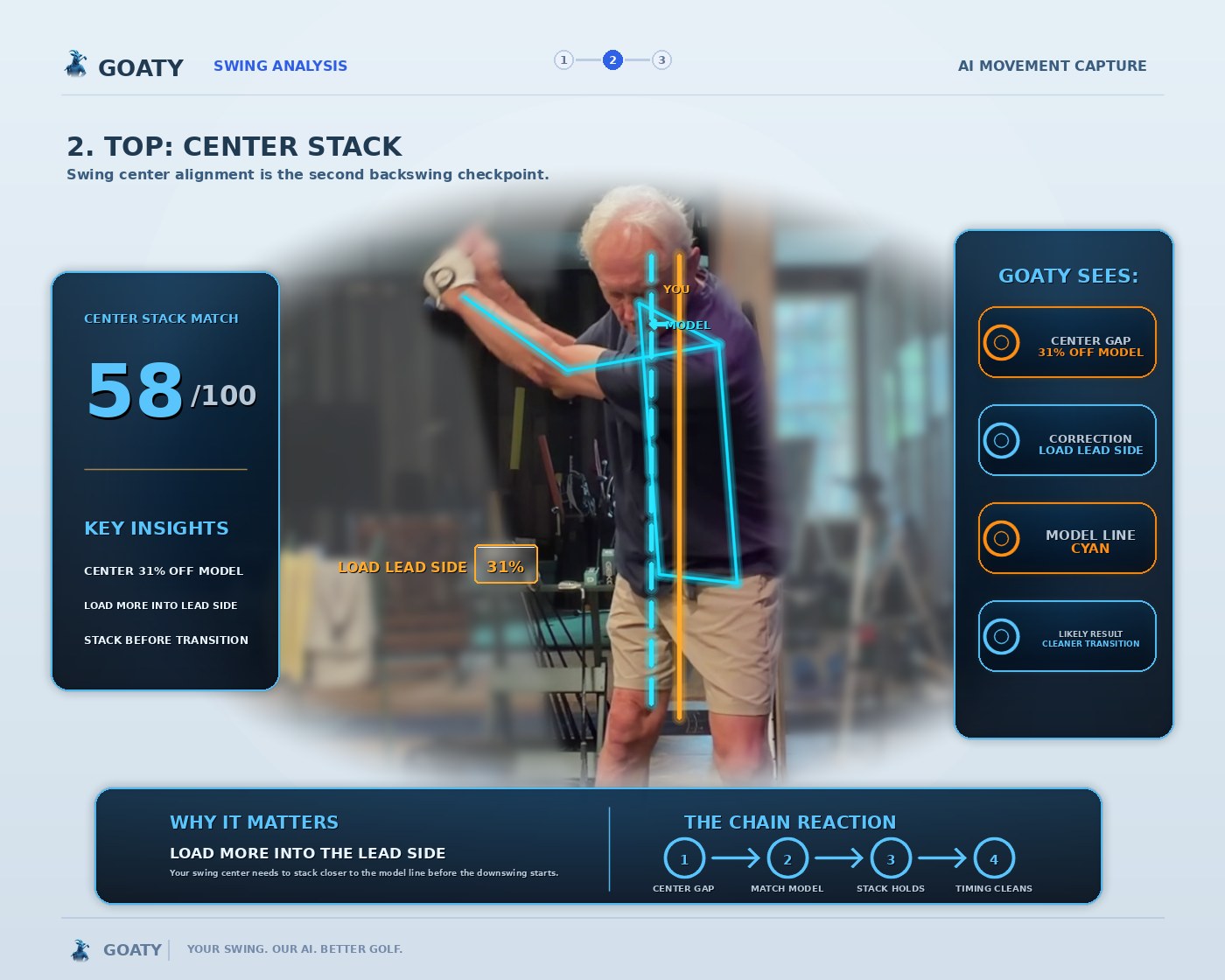
2. Center Stack
The center stack card shows whether the swing center is aligned before transition. Instead of saying "stay centered" in the abstract, GOATY shows the golfer's center line and the model line side by side, then names the correction: load the lead side before the downswing starts.
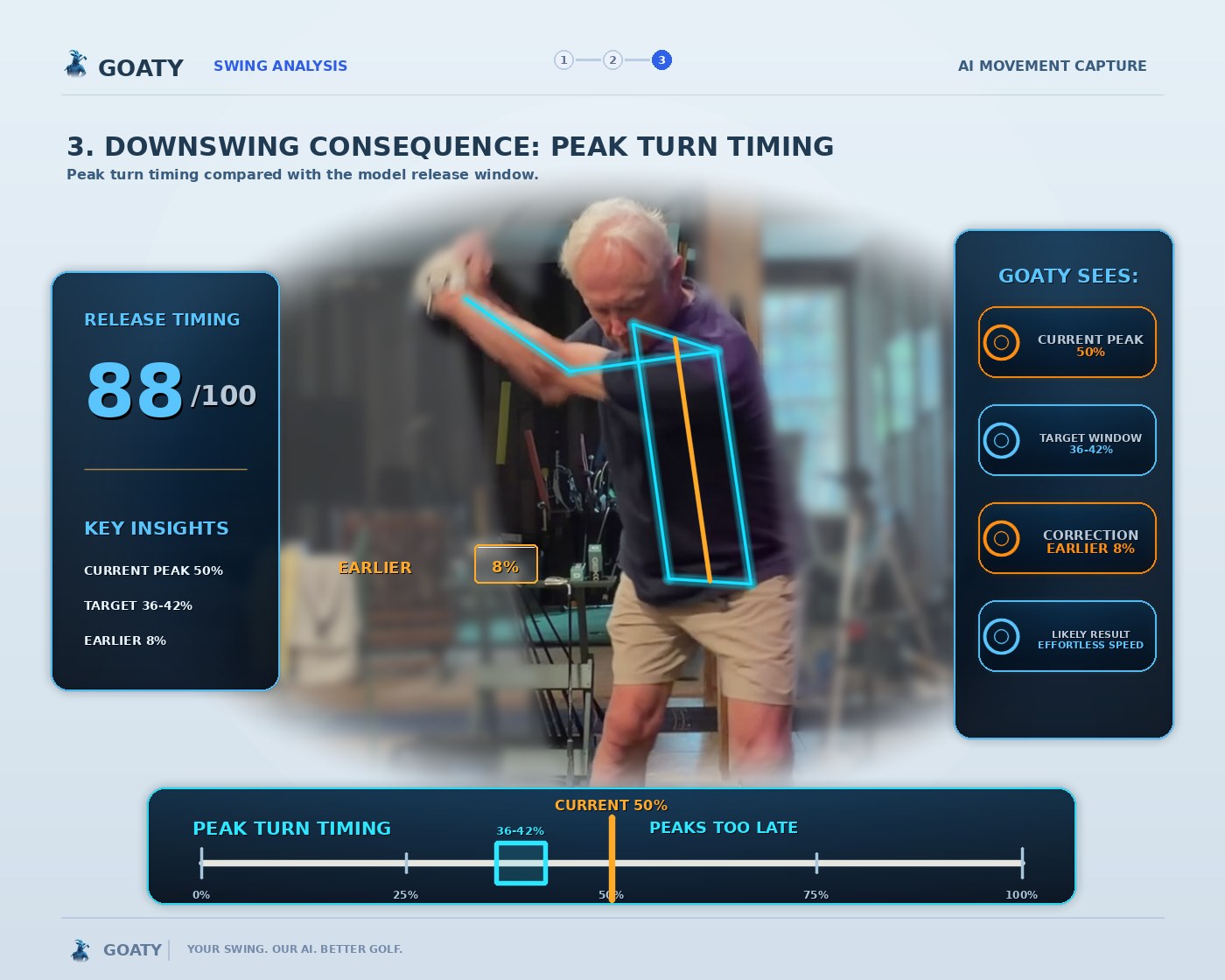
3. Peak Turn Timing
The peak turn timing card shows whether the body releases too late or too early compared with the model window. That matters because timing errors can make the release look like an arm problem when the real issue is the sequence of the body turn.
How This Changes GOATY Lessons
Visual cards make every lesson easier to remember. The golfer no longer has to translate a paragraph of coaching into a body feel. They can see the miss, see the model, and take the next rep with a clear target.
That is also why these cards belong inside the broader GOATY feedback loop. GOATY can coach live, score the rep, show the pattern, and keep adapting as the golfer improves. The visual language becomes a shared reference point between the golfer, the AI, and the RotarySwing instruction system.
See What GOATY Sees in Your Swing
Start with a free analysis or live lesson and let GOATY turn your swing into a visual coaching plan.
Analyze My Swing Free